


🔹 OpenFOAM: The Evolution of Open-Source CFD Through Collaboration and Conflict
- How the Philosophy Behind the Code Reached Korea
Computational fluid dynamics (CFD) is a technology used to analyze complex physical phenomena—such as airflow, water flow, heat transfer, and combustion—through computer simulation.
It plays a vital role in a wide range of industries, including aerospace, automotive, energy, shipbuilding, and marine engineering. OpenFOAM is one of the leading platforms driving open-source innovation in CFD.
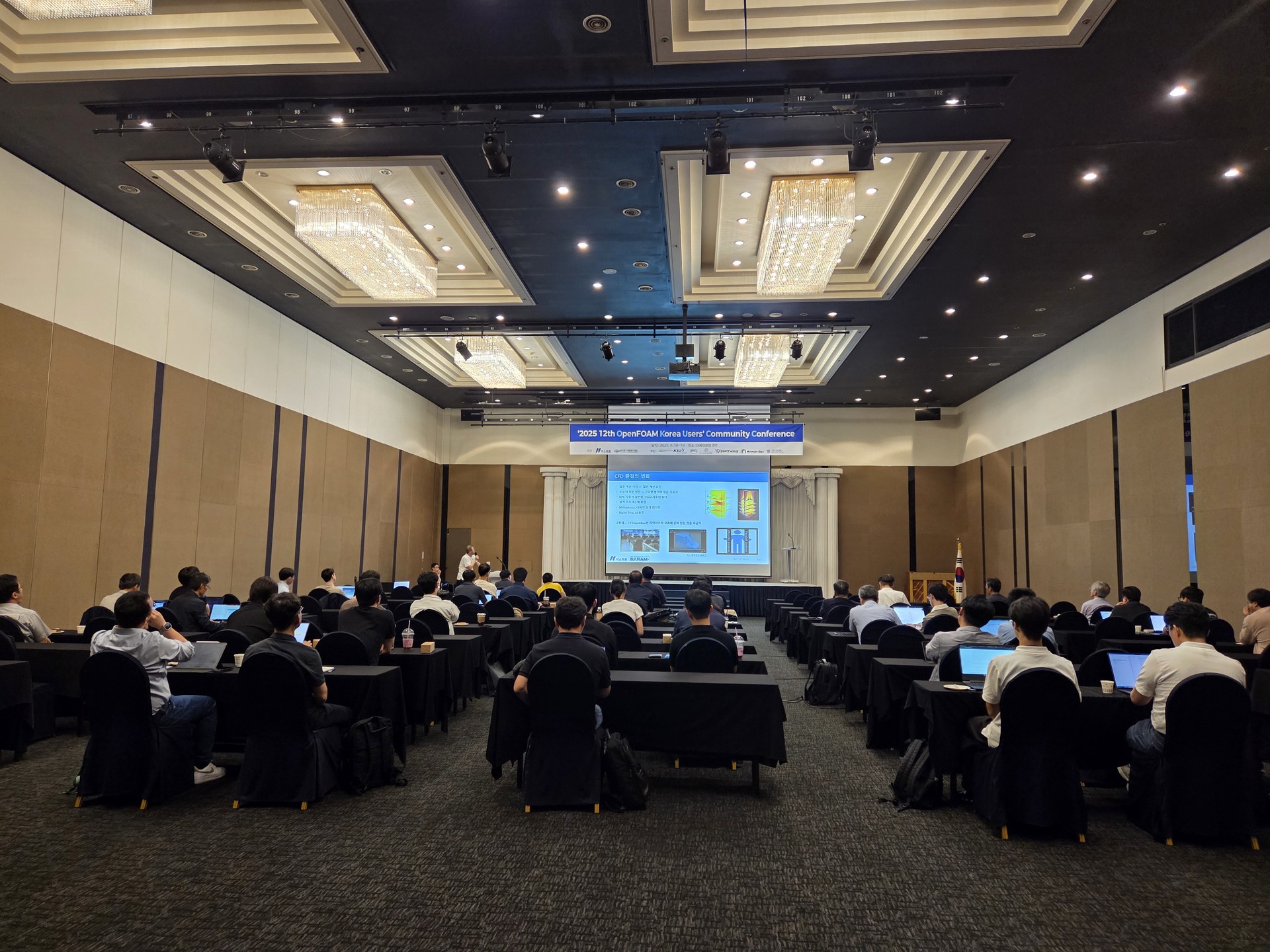
In Korea, the OpenFOAM Korea Users’ Community Conference (OKUCC) has grown around this technology.
OKUCC is Korea’s leading OpenFOAM user-community event, created to share open-source CFD technologies, user experiences, and research achievements.
 |  |
🔹 The Origins of OpenFOAM
A collaboration between two engineers with different philosophies
The story of OpenFOAM begins with two engineers: Henry Weller and Hrvoje Jasak. Weller focused on software architecture, stability, and community management. He built the platform structure and distribution system that enabled a broad community of users to work with OpenFOAM reliably.
Jasak, by contrast, concentrated on numerical methods and algorithmic research. Through work on multiphase-flow analysis and a wide range of numerical techniques, he greatly expanded OpenFOAM’s technical potential.
Their collaboration began with one establishing the platform framework and the other extending its technical capabilities. This complementary partnership played an important role in OpenFOAM’s growth.
🔹 Change Driven by Different Philosophies
Over time, the two developed different views on the direction of the project.
Weller prioritized stable software operation and maintenance, while Jasak emphasized freedom in technical experimentation and architectural expansion.
These differences eventually influenced how the project was developed and managed. Jasak went on to lead the independent foam-extend project, while Weller managed an OpenFOAM distribution through OpenCFD. Interestingly, this change ultimately made the OpenFOAM ecosystem more diverse.
OpenFOAM offered a stable distribution with strong industrial applicability, while foam-extend emphasized research-oriented extensibility and experimental architecture. These differing approaches gave users a broader range of options.
🔹 The OpenFOAM Community in Korea: The Beginning of OKUCC
An OpenFOAM-centered user community also began to take shape in Korea.
OKUCC—the OpenFOAM Korea Users’ Community Conference—was launched in 2013 through the efforts of Professor Shin Hyung Rhee of the Department of Naval Architecture and Ocean Engineering at Seoul National University and NEXTFOAM.
More than a series of technical presentations, OKUCC has developed into a forum where Korea’s CFD users learn and grow together by sharing industrial applications, presenting research results, and exchanging practical problem-solving experience.
Today, OKUCC is Korea’s longest-running open-source CFD community event.
It brings together experts from industry, academia, and research institutes to exchange the latest CFD developments, real-world industrial applications, and open-source research results.
Through presentations, workshops, and networking programs, participants can explore the present and future of open-source CFD technology together.
🔹 Connecting Asia with the Global OpenFOAM® Community
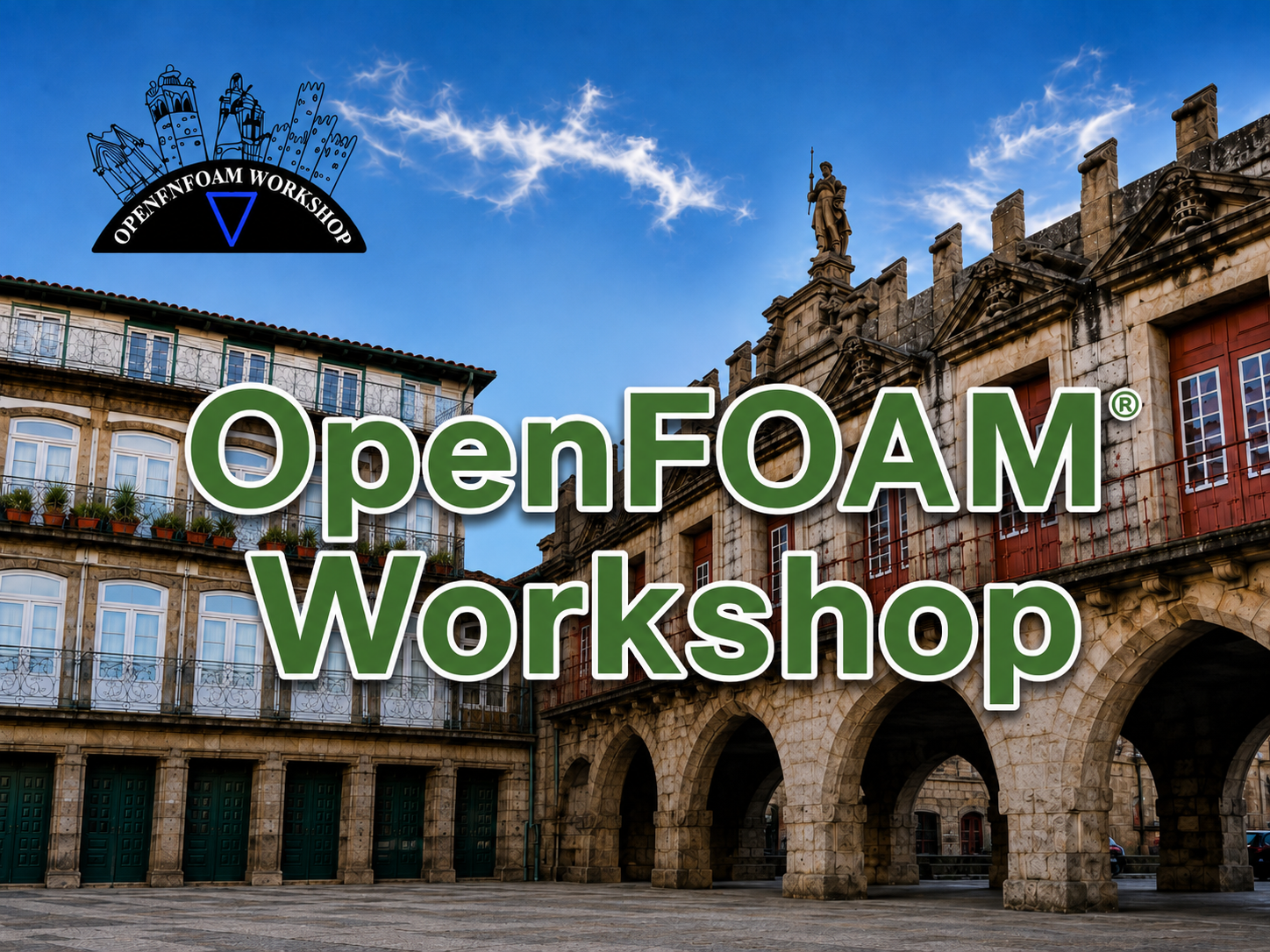
OpenFOAM® is a leading open-source simulation platform used in computational fluid dynamics (CFD) and many other fields of engineering analysis.
Because its source code is openly available, researchers, developers, and industry engineers around the world can use and adapt it freely. Its global community has grown through technical exchange and collaboration among users.
The OpenFOAM® Workshop is a major international event that brings together OpenFOAM® users and developers from around the world.
Since its inaugural meeting in Zagreb, Croatia, in 2006, the workshop has been held annually in countries across Europe, Asia, and North America.
Host cities have included Milan, Montreal, Gothenburg, Ann Arbor, Duisburg, Shanghai, Beijing, Cambridge, and Vienna. The eighth workshop was held on Jeju Island, South Korea, in 2013, and the 21st workshop took place in Guimarães, Portugal, in 2026.
The workshop features research achievements and industrial applications covering new solvers and numerical methods, mesh generation, high-performance computing, multiphase flow, heat transfer, aerodynamics, and many other OpenFOAM®-related topics.
Through technical presentations, educational programs, discussions, and networking, it has become an international forum for exploring the present and future of OpenFOAM® technology.
While the OpenFOAM® Workshop connects the global community, national and regional user conferences play an equally important role in bringing OpenFOAM® into practical research and industrial applications.
OKUCC not only connects industry, academia, and research institutes across Korea, but also introduces the latest developments from the global OpenFOAM® community to Korea and Asia. At the same time, it provides a channel for sharing Korean research achievements and industrial experience with the world. NEXTFOAM continues to participate in international events, including the OpenFOAM® Workshop, and to engage with users and developers from around the globe.
Through OKUCC, NEXTFOAM also introduces OpenFOAM-based technologies developed in Korea, the open-source CFD platform BARAM, and a wide range of applications from Korean companies and research organizations.
Going forward, NEXTFOAM will continue to expand exchanges among OpenFOAM® users in Korea and abroad through OKUCC, serving as a bridge that connects Korea and Asia with the global OpenFOAM® community.
 |  |  |
 |  |  |
 |  |  |
| NEXTFOAM team members at the 21st OpenFOAM Workshop in Portugal |